
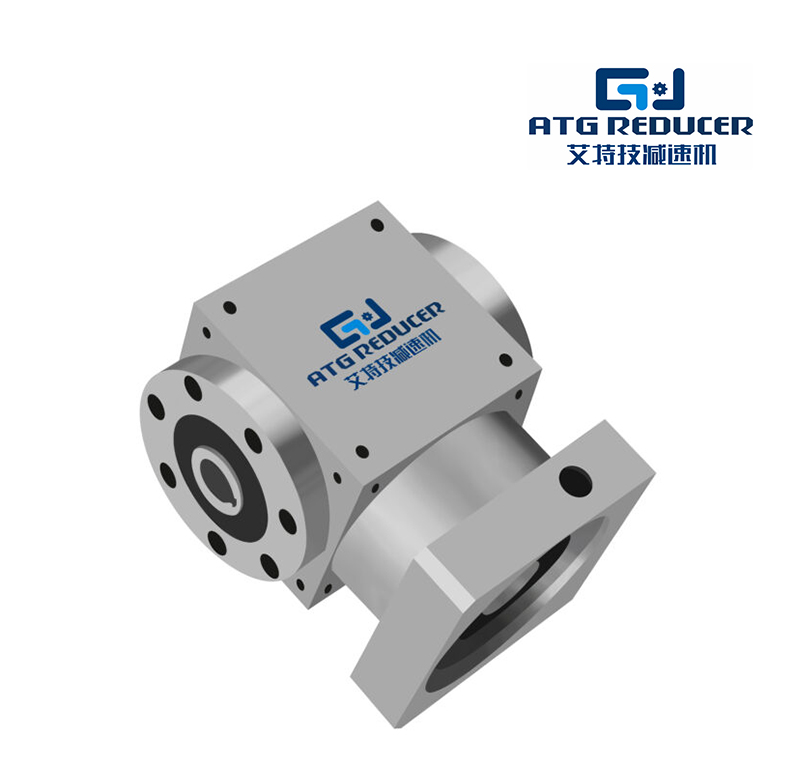
Backlash is one of the most important mechanical factors influencing the performance of a planetary gear reducer.
In precision motion control, automation, robotics, packaging equipment, CNC systems, and servo-driven machinery,
even a small amount of gear backlash can affect positioning accuracy, repeatability, noise level, smoothness, and long-term wear.
Understanding how backlash affects planetary gear reducer performance is essential for engineers, buyers, and system designers
who need reliable torque transmission and precise motion control.
A planetary gear reducer, also called a Planetary Gearbox or planetary gear speed reducer, is widely used because it offers
high torque density, compact structure, excellent load sharing, and efficient power transmission. However, the internal clearance
between meshing gears, known as backlash, can become a critical performance parameter. If backlash is too large, the output may
show lost motion and reduced accuracy. If backlash is too small, the system may run hotter, create more friction, and wear faster.
This balance makes backlash a key specification in planetary gear reducer selection.
Backlash is the small amount of free movement or clearance between mating gear teeth when the direction of rotation changes.
In a planetary gear reducer, backlash exists among the sun gear, planet gears, ring gear, carrier, and output shaft components.
It is usually measured as angular backlash at the output shaft or as linear movement at the load side.
In practical terms, backlash is the gap that allows gears to mesh without binding. This gap is necessary for lubrication,
thermal expansion, manufacturing tolerance, and smooth assembly. However, excessive backlash can reduce motion precision and
cause unwanted delay before torque is transferred from the input to the output.
For many applications, planetary gear reducer backlash is specified in arc-minutes, while high-precision reducers may be
listed in arc-seconds. Lower backlash generally means better positioning performance, but it may also require tighter
manufacturing control and higher cost.
Backlash directly influences how quickly and accurately the planetary gear reducer responds to input rotation. When a motor reverses
direction, the gear teeth must take up the clearance before the output shaft moves. This delay creates lost motion, which can reduce
system accuracy and make the machine less responsive.
In servo systems, robotic joints, and indexing equipment, backlash can affect:
Because of these effects, backlash is one of the first specifications engineers review when comparing Planetary Gear Reducers for
precision-driven applications.
Positioning accuracy is one of the most visible effects of backlash. When the input shaft changes direction, the output shaft does
not move immediately. This lost motion means the machine must rotate further before the load actually responds. In precision
automation, this can create positional error.
Repeatability refers to how consistently a reducer returns to the same position under repeated cycles. Excessive backlash reduces
repeatability, especially in applications with frequent reversing motion. Even if the motor control is precise, backlash can
create variation at the output shaft.
In high-speed motion systems, backlash can cause a delay before torque is transmitted after direction changes. This weakens
dynamic response and can make the drive system feel less rigid. In servo-controlled machines, this may also lead to tuning
difficulties and reduced control stability.
Backlash can contribute to impact noise when gear teeth engage after a direction change. The sudden contact between teeth may
create vibration, especially under load fluctuations. Over time, this can affect user experience and machine quality.
While some backlash is necessary, excessive clearance can allow repeated impact loading during reversing operation. This may
accelerate tooth wear, increase stress concentration, and shorten the useful life of the reducer. On the other hand, very low
backlash without enough lubrication or thermal allowance can also increase wear.
Under varying load conditions, backlash can create a small amount of motion before the gears re-engage fully. This can reduce
load stability in precision applications such as CNC axes, pick-and-place systems, and inspection devices.
| Backlash Level | Typical Performance Impact | Common Application Types |
|---|---|---|
| Very Low Backlash | High accuracy, excellent repeatability, reduced lost motion, higher cost, tighter installation requirements | Robotics, servo axes, metrology equipment, semiconductor machinery |
| Low Backlash | Good balance of precision and cost, suitable for most automation tasks, moderate motion smoothness | Packaging, printing, automated assembly, medical devices |
| Standard Backlash | Lower cost, acceptable for general motion transmission, less suitable for precision reversing motion | Conveyors, material handling, general industrial drives |
| High Backlash | More lost motion, lower positioning accuracy, may increase impact noise and wear | Non-precision drives, simple torque transfer systems |
The ideal backlash level depends on the system requirements, control method, load profile, and expected duty cycle.
A Precision Planetary Gear reducer often has tighter backlash specifications than a general-purpose reducer.
In industry literature, backlash is often defined as the amount of angular movement of the output shaft without corresponding
input rotation when the direction of rotation is reversed. It is usually the result of intentional tooth clearance and assembly
tolerance.
For planetary gear reducers, backlash may be described in several ways:
It is important to distinguish backlash from torsional compliance. Backlash is a clearance problem, while torsional compliance is
elastic twist under load. Both affect motion precision, but they are not the same.
Backlash is often seen as a negative factor, but controlled backlash is actually necessary for reliable planetary gear reducer
operation. When managed properly, it provides several benefits:
The goal is not to eliminate backlash entirely in every case, but to select a planetary gear reducer with backlash appropriate
for the application. Too little backlash can be just as problematic as too much.
Several design and operating factors determine how much backlash exists in a planetary gear reducer and how it changes over time.
Gear tooth accuracy, bore concentricity, carrier alignment, and bearing quality all affect the final backlash value.
High-precision reducers require tighter tolerances and better quality control.
Different gear ratios can influence the internal geometry of the reducer. Higher ratios may involve more gear stages,
which can affect cumulative backlash and torsional stiffness.
Heavy loads, shock loads, and reversing loads can cause wear that gradually increases backlash over time. Stable load profiles
generally help preserve performance.
Proper lubrication supports smooth meshing and reduces wear. Inadequate lubrication can increase surface damage and eventually
raise backlash beyond acceptable limits.
As operating temperature changes, gear components expand or contract. This can alter effective backlash. Reducer design must
account for thermal behavior.
Even a well-designed planetary gear reducer can perform poorly if misaligned during assembly or installation. Correct mounting,
shaft alignment, and rigid support help maintain intended backlash performance.
| Specification | Common Description | Performance Relevance |
|---|---|---|
| Backlash | Output shaft angular clearance, often in arc-minutes | Determines positioning accuracy and lost motion |
| Transmission Efficiency | Percentage of input power transferred to output | Affects heat generation and energy consumption |
| Rated Torque | Maximum continuous torque capacity | Must match application load requirements |
| Peak Torque | Short-duration overload torque capacity | Important for shock and start-stop duty |
| Torsional Stiffness | Resistance to elastic twist under load | Improves response and control stability |
| Service Life | Expected operating life under defined conditions | Indicates durability and maintenance interval |
| Protection Rating | Ingress protection or sealing level | Helps protect internal gear components |
When evaluating a planetary gear reducer, backlash should always be considered together with torque capacity, stiffness, efficiency,
and mounting compatibility.
Robots need accurate and repeatable motion. In robotic arms and joints, backlash can reduce endpoint precision and affect
path control. Low-backlash planetary gear reducers are often preferred for this reason.
CNC systems depend on accurate axis movement. Backlash can cause dimensional errors during direction changes, especially in
milling, cutting, and positioning operations. Tight backlash control is essential for high-quality machining results.
Packaging machines often run at high speed with frequent starts and stops. Backlash can reduce timing accuracy and increase
impact noise. A planetary gear reducer with stable backlash performance supports smoother production.
In automated assembly lines, backlash affects pick-and-place accuracy, synchronization, and repeatability. Reduced backlash
helps maintain process consistency.
Precision and quiet operation are important in medical equipment. Low backlash can improve movement control and reduce
disturbance during delicate operations.
Backlash and torsional stiffness are closely related but distinct. Backlash is free movement caused by gear clearance.
Torsional stiffness is the resistance to twisting when torque is applied.
| Feature | Backlash | Torsional Stiffness |
|---|---|---|
| Definition | Clearance between gear teeth | Resistance to elastic deformation |
| Effect on Motion | Causes lost motion during reversal | Causes twist under load |
| Measurement | Arc-minutes or arc-seconds | Torque per angular displacement |
| Impact on Precision | Directly affects reversal accuracy | Affects dynamic response and load stability |
For best performance, a planetary gear reducer should combine low backlash with high torsional stiffness. Low backlash alone
does not guarantee precision if the structure is too flexible.
Choosing the right backlash level begins with understanding the application’s motion requirements. Consider the following:
If the application involves precision positioning, servo feedback, or frequent reversal, a low-backlash planetary gear reducer
is usually preferable. For simple power transmission, a standard backlash level may be sufficient.
Although backlash cannot be fully eliminated in every planetary gear reducer, several design and operational practices can reduce
its negative impact:
A common misconception is that zero backlash is always the best choice. In reality, some clearance is needed for gear operation,
thermal expansion, and lubrication. Another misconception is that backlash alone determines performance. In fact, a planetary
gear reducer’s behavior also depends on stiffness, efficiency, load capacity, bearing support, and installation quality.
Another frequent misunderstanding is that low backlash automatically means long life. While low backlash improves precision,
durability still depends on material quality, lubrication, duty cycle, and operating environment.
Over time, backlash in a planetary gear reducer may increase due to wear, lubricant degradation, contamination, or repeated
shock loading. This is why long-term performance stability matters as much as initial backlash specification.
Preventive maintenance, correct load selection, and proper environmental protection can help preserve the original backlash
performance for a longer period. In demanding applications, periodic inspection is recommended to confirm that the reducer
still meets motion accuracy requirements.
| Application Level | Typical Backlash Requirement | Main Performance Goal |
|---|---|---|
| Ultra-Precision | Very low backlash | Maximum positioning accuracy and repeatability |
| Precision Automation | Low backlash | Balanced accuracy, smoothness, and cost |
| General Industrial Automation | Standard low to moderate backlash | Reliable motion transmission and acceptable precision |
| Non-Precision Drive Systems | Moderate to higher backlash | Cost-effective torque transfer |
No. A certain amount of backlash is necessary for proper gear meshing, lubrication, and thermal expansion. The issue is not
backlash itself, but excessive backlash beyond the needs of the application.
Not always. Lower backlash improves positioning precision, but the reducer must still provide enough lubrication clearance,
stiffness, and durability for the operating conditions.
Backlash is commonly measured as output shaft angular movement in arc-minutes or arc-seconds, often using specialized test
methods under no-load or standard test conditions.
Yes. Wear, contamination, poor lubrication, and repeated shock loading can increase backlash gradually over the service life
of the reducer.
Backlash is a defining performance factor in any planetary gear reducer. It influences accuracy, repeatability, noise, wear,
and dynamic motion control. For precision applications, low-backlash planetary gear reducers provide a major advantage by
reducing lost motion and improving output response. For general power transmission, a standard backlash level may be sufficient
and more cost-effective.
When selecting a planetary gear reducer, backlash should never be evaluated alone. It must be considered alongside torque
capacity, torsional stiffness, efficiency, operating environment, and maintenance requirements. With the right specification,
a planetary gear reducer can deliver reliable, efficient, and precise performance across a wide range of industrial applications.
This website uses cookies to ensure you get the best experience on our website.

 Chinese
 Español
 Pусский
 Deutsch
 Tiếng Việt



 Phone
Phone
Comment
(0)