
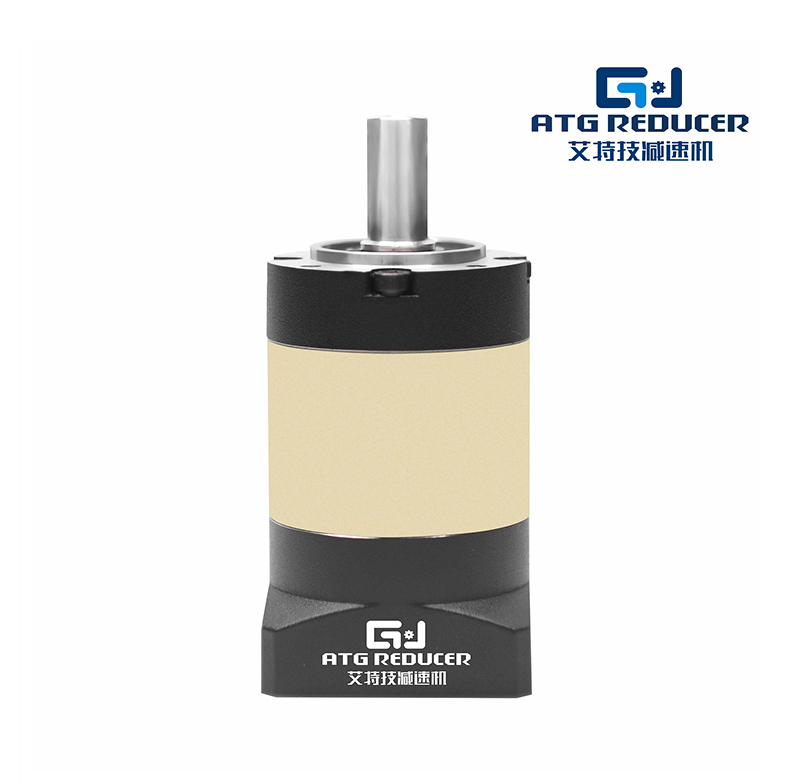
A Hollow Rotary Platform With Servo Motor is a high-precision rotary motion device designed to deliver stable, repeatable, and controllable angular positioning while allowing cables, shafts, pipes, or optical lines to pass through the center opening. In modern automation systems, this type of rotary platform is widely used in indexing, test equipment, robotic cells, semiconductor processing, laser systems, assembly lines, inspection stations, and packaging machinery.
If you are building a motion control system and need compact rotary movement with excellent accuracy, a hollow rotary platform with servo motor can provide a strong combination of torque output, positioning precision, rigid structure, and integration flexibility. Compared with standard rotary tables, the hollow design improves routing convenience and reduces interference in machine layout. Compared with basic stepping systems, the servo motor version offers smoother motion, better closed-loop feedback, and higher reliability in demanding applications.
This page provides industry-focused information about the definition, working principle, main advantages, typical specifications, selection factors, applications, and SEO-friendly technical insights related to hollow rotary platforms with servo motors. It is written for industrial buyers, engineers, system integrators, automation designers, and technical content pages that need original, search-friendly text.
A hollow rotary platform with servo motor is a rotary positioning stage that combines a hollow central bore with a servo-driven motion system. The platform rotates an upper load-bearing table around a vertical or horizontal axis, while the center hole remains open for wire bundles, rotary joints, pneumatic tubes, sensor cables, camera lines, and transmission elements.
The servo motor provides precise closed-loop control over speed, acceleration, deceleration, and final angular position. This makes the device suitable for applications requiring accurate indexing, intermittent rotation, synchronized movement, and repeatable angle control. The hollow structure is especially useful in compact automation equipment where space optimization and internal routing are important.
In industrial terms, a hollow rotary platform with servo motor is often considered a Precision Motion Module or rotary indexing unit. It may be used as a standalone motion axis or integrated into a multi-axis system with linear guides, actuators, robots, and machine vision devices.
The operating principle of a hollow rotary platform with servo motor is based on servo feedback control and mechanical transmission. The servo motor receives a command from the controller, then drives the rotary mechanism through a coupling, gear train, belt system, or direct-drive structure depending on the design. A feedback device, usually an encoder, monitors actual rotation and continuously corrects position errors.
The hollow bore runs through the center of the rotation axis. This allows the designer to place fixed or moving utilities through the middle without external cable loops or cluttered routing around the platform. As a result, machine design becomes cleaner, safer, and easier to maintain.
A typical motion cycle may include:
Because the system is servo-controlled, it can support accurate start-stop motion, variable speed rotation, and repeatable positioning under changing load conditions.
The hollow rotary platform with servo motor offers several advantages that make it valuable in modern automation, precision assembly, and inspection systems.
Servo control enables precise angular positioning, which is critical for indexing, measuring, align-to-position processes, and automated assembly tasks. Closed-loop feedback helps maintain accuracy even when load conditions change.
Compared with open-loop rotary solutions, a servo motor provides smoother acceleration and deceleration. This reduces vibration, mechanical shock, and wear on connected components.
The hollow center improves routing flexibility for wires, tubes, sensors, and shafts. This feature is highly useful in compact machinery, where interference-free design is essential.
The hollow rotary platform simplifies equipment design by keeping cabling and utilities hidden through the center. This can improve cleanliness, reduce snag risk, and support a more professional machine layout.
Many hollow rotary platforms are designed to support radial loads, axial loads, and moment loads, making them suitable for rotating fixtures, tooling plates, inspection heads, and workpiece carriers.
Repeated rotation to the same angular position is one of the key strengths of servo-based systems. This repeatability is important in industrial indexing and production automation.
A servo motor can be integrated with PLC systems, motion controllers, CNC platforms, industrial computers, and robotic control systems. This improves compatibility with modern automation architecture.
Hollow rotary platforms with servo motors are used in a wide range of industries because they solve both motion control and routing challenges at the same time.
| Industry | Typical Use | Why the Hollow Rotary Platform Is Useful |
|---|---|---|
| Automation Equipment | Rotary indexing, assembly transfer, positioning | Precise angle control and compact cable routing |
| Machine Vision | Camera rotation, inspection positioning | Stable motion and center-through wiring access |
| Semiconductor | Wafer handling, alignment stages | High accuracy, clean integration, controlled motion |
| Medical Devices | Test platforms, diagnostic rotation | Smooth movement and compact machine design |
| Packaging | Sorting, labeling, turning stations | Fast repeatable rotation and simplified layout |
| Robotics | Rotary end-of-arm modules, workcell fixtures | Servo precision and utility passthrough |
| Testing and Measurement | Load rotation, inspection, calibration | Controlled indexing and stable repeat positioning |
| Laser and Optics | Beam alignment, optical rotation | Accurate angle control and cable management |
These applications show why the search term hollow rotary platform with servo motor is closely associated with industrial automation, motion control, rotary indexing, and precision positioning.
When comparing different hollow rotary platform models, buyers should review key specifications such as torque, rotation speed, bore diameter, repeatability, load capacity, and controller compatibility. The actual values vary by design and application, but the following table shows common industry-style specification categories.
| Specification | Typical Range or Description | What It Affects |
|---|---|---|
| Hollow Bore Diameter | Small to large depending on model | Cable routing, shaft passage, utility integration |
| Rated Torque | Application-specific | Ability to move and hold load under resistance |
| Peak Torque | Higher than rated torque for short durations | Acceleration, transient load response |
| Positioning Accuracy | High precision, model dependent | Final angle correctness |
| Repeatability | Very important for indexing tasks | Consistency across repeated cycles |
| Rotation Speed | Low to moderate or high depending on design | Cycle time and production throughput |
| Load Capacity | Axial, radial, and moment load ratings | Weight and off-center load support |
| Servo Motor Type | AC servo, DC servo, or integrated servo system | Control method and system compatibility |
| Encoder Resolution | Varies by motor and feedback design | Motion feedback precision |
| Control Interface | Pulse, analog, EtherCAT, CAN, RS-485, or other industrial protocols | Integration with automation controllers |
| Mounting Style | Horizontal or vertical installation | Machine design compatibility |
| Protection Level | Standard or enhanced protection depending on environment | Resistance to dust, moisture, and contamination |
Choosing the right hollow rotary platform with servo motor requires a detailed review of performance factors. Not all rotary platforms are built for the same motion profile, duty cycle, or load condition.
Determine whether the load is centered or off-center, static or dynamic, light or heavy. Off-center loads create moment forces that can reduce stability if the platform is undersized.
Torque determines the platform’s ability to rotate the load smoothly and hold position against resistance. Torque demand rises when the load is heavy, accelerated quickly, or mounted with a large radius.
If the application requires fine angular control, encoder resolution and servo tuning become especially important. Higher resolution supports more accurate motion feedback.
In production environments, the speed of indexing and repeat movement directly affects throughput. A hollow rotary platform with servo motor should match the required cycle time without sacrificing stability.
Low backlash and strong structural rigidity are important for precise positioning and consistent motion under load. These characteristics influence system quality and long-term repeatability.
Consider dust, vibration, heat, and possible contamination. The operating environment can affect component life, lubrication needs, and enclosure requirements.
Hollow rotary platforms with servo motors can be designed in several mechanical forms, each with different strengths.
| Design Structure | Main Feature | Common Benefit |
|---|---|---|
| Direct Drive Rotary Platform | Motor drives the load directly | High smoothness, reduced backlash, high response |
| Gear-Driven Rotary Platform | Uses gear transmission | Higher torque output and compact force multiplication |
| Belt-Driven Rotary Platform | Uses belt transfer between motor and table | Quieter motion and design flexibility |
| Harmonic Drive Rotary Platform | Uses precision reduction mechanism | High precision and strong load control |
| Integrated Servo Rotary Stage | Motor, drive, and feedback packaged together | Simplified installation and easier system integration |
The best design depends on required accuracy, torque, speed, available space, and machine architecture. Some systems prioritize ultra-smooth motion, while others prioritize load capacity or cost efficiency.
The hollow bore is one of the most important features of a hollow rotary platform. In many automation systems, the center opening creates major practical benefits.
This is why many engineers specify a hollow rotary platform with servo motor when they need a clean, professional, and scalable layout for complex automation equipment.
When selecting a hollow rotary platform with servo motor, it is helpful to use a structured decision process.
| Selection Step | Question to Ask | Why It Matters |
|---|---|---|
| 1. Load Analysis | How heavy is the payload and where is the center of gravity? | Determines torque and load capacity requirements |
| 2. Motion Profile | Will the platform move continuously, intermittently, or in steps? | Helps define speed and acceleration needs |
| 3. Accuracy Requirement | What angular precision is needed? | Influences encoder and servo selection |
| 4. Bore Size | What must pass through the center opening? | Defines hollow diameter needs |
| 5. Environmental Conditions | Is the platform used in clean, dusty, hot, or humid environments? | Determines protection and durability needs |
| 6. Control System | Which controller or network protocol will be used? | Ensures communication compatibility |
| 7. Mounting Space | How much installation space is available? | Confirms physical fit and maintenance access |
| 8. Duty Cycle | How often will the platform operate? | Impacts heat generation and service life |
The servo motor is a key reason why hollow rotary platforms are preferred in precision motion systems. Unlike basic motor solutions, servo control uses feedback to continuously compare the commanded position with the actual position. If error occurs, the system corrects it in real time.
This closed-loop strategy offers several major benefits:
In industrial automation, these characteristics are essential for reliable production and quality control. For this reason, the search phrase hollow rotary platform with servo motor is closely linked to advanced machine performance and precision positioning solutions.
If you are building a product page, catalog page, or industry landing page, including the following technical terms can help improve keyword coverage and semantic relevance:
| Technical Term | Meaning in Context |
|---|---|
| Rotary Indexing | Rotating to fixed angles in repeat cycles |
| Closed-Loop Control | Feedback-based motion correction |
| Angular Positioning | Precise control of rotational angle |
| Moment Load | Load force created by off-center weight |
| Backlash | Lost motion caused by transmission clearance |
| Encoder Feedback | Position signal used by servo control |
| Duty Cycle | Operating time compared with rest time |
| Motion Precision | How accurately the platform reaches target positions |
To support organic search visibility, content about a hollow rotary platform with servo motor can naturally include related keyword variations. Use them in a helpful, readable way rather than keyword stuffing.
These keyword variations can be distributed across headings, body text, image alt text, FAQ blocks, and specification tables for better topical depth.
A hollow rotary platform with servo motor is designed for long-term industrial use, but reliability still depends on proper selection, installation, and maintenance.
Good maintenance practices help extend service life and preserve motion precision. In high-cycle systems, preventive inspection is especially valuable because small mechanical issues can affect positioning accuracy over time.
| Question | Short Answer |
|---|---|
| What is a hollow rotary platform with servo motor used for? | It is used for precise rotary positioning, indexing, and motion control with cable or shaft passage through the center. |
| Why choose a hollow design? | The hollow center allows wires, tubes, and shafts to pass through cleanly, improving machine integration. |
| Is servo control better than basic motor control? | For precision applications, yes, because servo systems offer closed-loop feedback and better accuracy. |
| Can it be used in automated production lines? | Yes, it is commonly used in industrial automation, testing, inspection, and assembly systems. |
| What factors should be checked before purchase? | Load capacity, torque, bore size, accuracy, speed, control interface, and environmental conditions. |
The Hollow Rotary Platform With Servo Motor is a versatile and highly practical motion control solution for modern industrial systems. Its combination of a hollow center opening, servo-driven precision, stable indexing performance, and easy system integration makes it suitable for a wide range of automation, inspection, robotics, packaging, and measurement applications.
For engineers and buyers, the most important evaluation points are torque, load capacity, accuracy, bore size, motion profile, and control compatibility. For content creators and SEO specialists, this topic offers strong commercial and technical keyword relevance because it sits at the intersection of rotary motion, servo control, and industrial automation.
If your website needs an industry page, product category page, technical blog article, or catalog introduction, content about a hollow rotary platform with servo motor can support strong search visibility when written with clear structure, useful tables, and natural keyword placement.
This website uses cookies to ensure you get the best experience on our website.

 Chinese
 Español
 Pусский
 Deutsch
 Tiếng Việt



 Phone
Phone
Comment
(0)