
Commutator Applications in Industrial Transmission Systems
In modern industrial automation, every mechanical system needs reliable power transmission and accurate motion control. While Gear Reducers and Planetary Gearboxes are widely known, the commutator is also an important transmission component used in many industrial applications. A high-quality commutator helps machines change the direction of power transmission, optimize mechanical layout, and achieve more flexible equipment design.
At Qiandeyi Transmission Technology (Suzhou) Co., Ltd., we focus on the research, development, and manufacturing of intelligent transmission components, including Industrial Commutators, Planetary Gear Reducers, Hollow Rotary Platforms, harmonic gearboxes, and automation drive solutions. With years of experience in precision transmission manufacturing, we provide reliable products for industrial robots, CNC equipment, automated production lines, logistics systems, and new energy equipment.
A commutator is a mechanical transmission component designed to change the direction of rotational movement or transfer power between different mechanical axes. In simple words, it allows machines to change the direction of motion without changing the original power source.
In many industrial machines, the motor position cannot always be directly connected to the driven part. Due to space limitations, equipment structure, or special movement requirements, engineers need a component that can redirect the transmission path. This is where a commutator becomes useful.
A precision industrial commutator usually contains gears, shafts, bearings, and housing structures. Through accurate gear engagement, it transfers rotational force smoothly while maintaining stability and efficiency.
Gear System | Transfers rotational power | Stable transmission |
Shaft Structure | Connects mechanical parts | Flexible equipment design |
Bearing System | Supports rotation | Reduces friction and improves life |
Housing | Protects internal components | Improves reliability |
Source: General mechanical transmission design principles and industrial equipment applications.
The working principle of a commutator is based on gear transmission. When the input shaft receives power from a motor, the internal gears transfer the rotation to the output shaft while changing the direction of movement.
The basic working process includes:
Power Input: The motor provides rotational force to the input shaft.
Gear Transmission: Internal gears transfer movement between shafts.
Direction Change: The output shaft provides the required motion direction.
Power Output: The connected machine receives controlled mechanical power.
Compared with direct transmission methods, a commutator provides more flexibility for machine designers and allows equipment structures to become more compact.
One of the biggest advantages of a commutator is its ability to change the transmission direction. This allows engineers to design machines with better space utilization.
This feature is especially useful in:
Compact automation equipment
Multi-axis machines
Robotic systems
Special mechanical structures
Precision manufacturing ensures that internal gears work smoothly with reduced energy loss. A well-designed commutator can provide efficient power transmission for long-term operation.
Modern factories often require smaller and more efficient equipment. A compact commutator helps reduce machine size while maintaining transmission performance.
Industrial equipment often operates continuously. A reliable commutator needs good mechanical strength, accurate gear processing, and stable bearing support to maintain long service life.
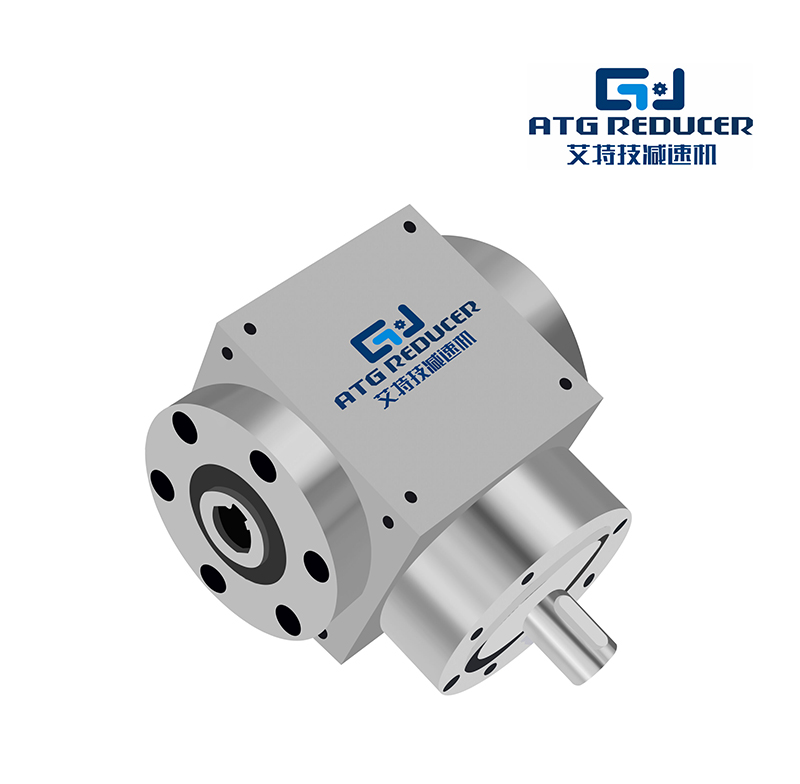
Commutators are used in many industries where flexible mechanical transmission is required. Their applications continue to expand with the growth of automation technology.
Industrial robots require flexible joint structures and accurate movement. A commutator can help optimize the mechanical layout of robot systems by changing the transmission direction.
Typical applications include:
Robot arms
Automatic handling equipment
Assembly robots
Inspection robots
CNC machines require precise and stable movement. Commutators can be used in special transmission structures where traditional direct connection is difficult.
They help improve:
Mechanical flexibility
Space utilization
Motion reliability
In automated factories, production equipment often includes multiple mechanical movement systems. A commutator helps connect different transmission directions and simplify equipment design.
Applications include:
Packaging machinery
Assembly lines
Material handling systems
Inspection equipment
The new energy industry requires highly automated production equipment. Battery manufacturing lines and inspection systems often need compact and reliable transmission components.
Commutators can support:
Battery assembly equipment
Automatic testing machines
Precision manufacturing systems
Robotics | Industrial robot arms | Flexible transmission layout |
CNC Manufacturing | Precision machines | Stable motion control |
Automation | Production lines | Space-saving design |
New Energy | Battery equipment | Reliable continuous operation |
Source: Qiandeyi industrial transmission application experience.
Although both commutators and gear reducers are transmission components, they have different functions.
Main Purpose | Change transmission direction | Reduce speed and increase torque |
Main Function | Mechanical layout optimization | Power adjustment |
Common Use | Special transmission structures | Robots and automation equipment |
Key Advantage | Flexible installation | High torque output |
Source: Mechanical transmission engineering comparison.
Selecting a suitable commutator requires understanding the actual working environment and machine requirements.
Important factors include:
Transmission Ratio: Determines output speed relationship.
Load Capacity: Ensures reliable operation under working conditions.
Accuracy Requirement: Important for precision equipment.
Installation Size: Must match the machine structure.
Operating Environment: Includes temperature, dust, and working cycle.
At Qiandeyi, we understand that transmission components directly affect machine performance. Therefore, we control quality throughout the entire manufacturing process.
Our production process includes:
Raw material inspection
Precision machining
Component assembly
Performance testing
Final quality inspection
Before shipment, every product is checked for transmission performance, noise, vibration, and operational stability.
Qiandeyi Transmission Technology provides professional transmission solutions for global industrial customers. Our products are widely used in more than 30 countries and support industries including robotics, automation, CNC manufacturing, logistics, and new energy.
Our advantages include:
More than 20 years of industry experience from the core technical team
Professional production equipment
High precision testing instruments
ISO9001, ISO14001, and ISO45001 certifications
Customized solutions according to customer requirements
A commutator is an important component in industrial transmission systems, helping machines achieve flexible movement, compact design, and reliable operation. As automation technology continues to develop, Precision Transmission Components will become increasingly important.
From industrial robots and CNC machines to intelligent manufacturing equipment, Qiandeyi provides dependable commutator and transmission solutions to help customers improve machine performance and production efficiency.
This website uses cookies to ensure you get the best experience on our website.

 Chinese
 Español
 Pусский
 Deutsch
 Tiếng Việt



 Phone
Phone
Comment
(0)