
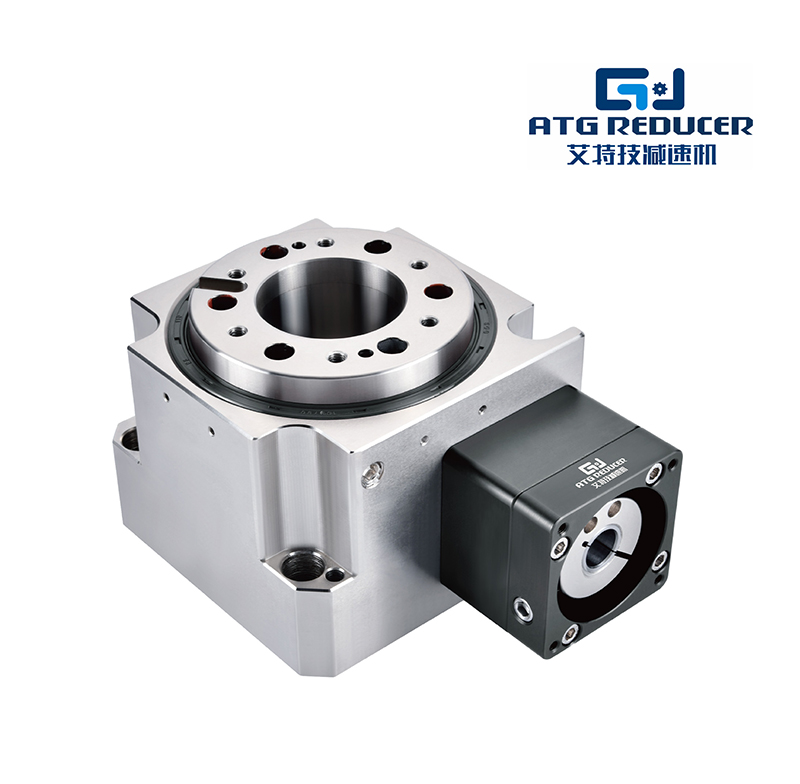
An ATG gear reducer for robotics is a precision motion transmission component designed to reduce motor speed while increasing torque for robotic applications. In robotics, accurate motion, high repeatability, compact structure, and stable transmission are essential. A high-performance gear reducer plays a critical role in ensuring that robot joints, actuators, and automated systems can move smoothly, position precisely, and handle dynamic loads reliably.
As robotics continues to expand across industrial automation, collaborative robots, service robots, medical devices, logistics systems, and intelligent manufacturing, the demand for advanced reduction gear solutions continues to grow. ATG gear reducers are commonly discussed in the context of high-precision robotic gear reduction, low-backlash transmission, high torque density, and compact servo motion systems. These characteristics make them highly suitable for robotic arms, rotary joints, end-effectors, and other advanced motion platforms.
This page provides general, industry-focused information about ATG gear reducers for robotics, including definitions, working principles, benefits, common types, typical specifications, selection factors, applications, and maintenance considerations. The content is written in a way that supports SEO, Google indexing, and clear internal structuring for use in blog posts, directory pages, and industrial product category pages.
An ATG gear reducer for robotics is a mechanical device that reduces the rotational speed of an input motor and multiplies the output torque delivered to a robotic mechanism. In simple terms, it converts fast, low-torque motor rotation into slower, stronger, and more controllable output motion. This is important in robotics because many motors, especially servo motors and stepper motors, operate at high speed but do not naturally provide enough torque for demanding load conditions.
In robot systems, gear reducers are used to improve motion precision, reduce the effective load on the motor, and enhance the overall performance of the joint or axis. The term ATG gear reducer is often associated with compact, high-efficiency, and precision transmission designs used in robotics and automation. Although specific design variants can differ by structure and application, the general purpose remains the same: to support reliable, accurate motion with minimal error and maximum efficiency.
Because robotic systems require repeatable movement and exact positioning, the gear reducer must deliver low backlash, high stiffness, and stable output characteristics. These properties help robots maintain accuracy during pick-and-place operations, welding, assembly, inspection, packaging, and many other motion-critical tasks.
In robotics, the gear reducer is not just a supporting component; it is a core part of the motion architecture. Without a suitable reducer, the motor would need to produce extremely high torque directly, which would increase cost, size, heat generation, and energy consumption. A precision reducer allows a smaller motor to deliver the effective torque required by the robot.
Key reasons gear reducers are essential in robotics include:
As robotic systems become more advanced, the need for high ratio, low-backlash, and high-torque-density reducers increases. This is especially true in collaborative robotics, humanoid robotics, and multi-axis automation, where every joint must be accurate, responsive, and compact.
An ATG gear reducer works by using internal gear geometry to transfer power from the motor input to the output shaft at a reduced speed and increased torque. The exact mechanism depends on the reducer type, but the principle is always the same: gear teeth engage in a way that changes the speed-torque relationship.
Typical operating flow:
In robotics, the reducer must do more than simply lower speed. It must maintain repeatability, reduce mechanical play, and operate smoothly under dynamic conditions. A good reducer design minimizes vibration and backlash while providing adequate stiffness and load capacity.
ATG gear reducers for robotics offer several important performance advantages for automation and motion control systems. These advantages are a major reason they are widely used in industrial robots, collaborative arms, and precision equipment.
| Advantage | Explanation | Robotic Benefit |
|---|---|---|
| High Torque Density | Delivers large output torque in a compact body | Supports small, lightweight robot joints with strong load handling |
| Low Backlash | Minimizes lost motion between gear engagement points | Improves positioning accuracy and repeatability |
| Compact Design | Provides reduction in a small installation space | Ideal for integrated robotic arms and tight mechanical structures |
| High Efficiency | Transfers energy effectively from input to output | Reduces heat and improves energy utilization |
| Strong Load Capacity | Handles radial and axial forces depending on design | Supports dynamic motion and repeated operation |
| Stable Motion | Helps smooth out motor response and transmission irregularities | Reduces vibration and improves robotic control |
These advantages make ATG gear reducers suitable for applications where precision, durability, and compactness are equally important. Whether the robot is moving a tool head, a gripper, or an articulated arm, the reducer helps define the quality of movement.
Robotics applications use several reducer designs, each with different strengths. While the exact structure of an ATG gear reducer can vary by model, the following types represent the most common categories in the robotic motion field.
| Reducer Type | Key Features | Typical Robotic Use |
|---|---|---|
| Planetary Gear Reducer | Compact, efficient, widely used, good torque density | Servo axes, automation equipment, mobile robots |
| Harmonic Drive Reducer | Extremely low backlash, high precision, compact profile | Robot joints, medical devices, precision positioning |
| Cycloidal Reducer | High shock resistance, large reduction ratio, strong rigidity | Industrial robot joints, heavy-duty automation |
| Worm Gear Reducer | Simple structure, high reduction, often self-locking | Lifting systems, low-speed movement, auxiliary axes |
| Shaft-Mounted Reducer | Easy installation, direct coupling options | Conveyor robots, handling systems, rotating mechanisms |
For robotics, the choice of reducer type depends on torque requirements, precision targets, installation space, response speed, and cost expectations. In many precision robot systems, low-backlash reducers are preferred because they improve path accuracy and reduce error accumulation.
When evaluating an ATG gear reducer for robotics, buyers and engineers usually look at a specific set of technical specifications. These values determine whether the reducer is suitable for a certain robotic joint or automation axis.
| Specification | Description | Importance in Robotics |
|---|---|---|
| Reduction Ratio | The ratio between input speed and output speed | Controls speed reduction and torque multiplication |
| Rated Torque | Continuous output torque under normal operating conditions | Determines load-carrying capability |
| Peak Torque | Maximum short-term torque capacity | Important for acceleration, stopping, and shock loads |
| Backlash | Angular lost motion between input and output | Critical for precision and repeatability |
| Torsional Stiffness | Resistance to elastic deformation under torque | Affects accuracy during motion and holding |
| Efficiency | Percentage of input power transferred to output | Impacts heat generation and power consumption |
| Input Speed | Maximum allowable speed at the motor side | Must match motor performance |
| Service Life | Expected operating lifespan under specified loads | Important for maintenance planning and reliability |
| Mounting Size | Physical dimensions and interface type | Must fit robot architecture and enclosure |
| Noise Level | Operational acoustic output | Relevant in collaborative and service robotics |
Below is a general reference table of common performance ranges used in robotics. Actual values may vary by reducer structure, size, and design goal, but these ranges help define typical market expectations for precision gear reduction systems.
| Parameter | Common Range | Application Note |
|---|---|---|
| Reduction Ratio | 5:1 to 100:1 or higher | Higher ratios are used for high-torque, low-speed motion |
| Backlash | Very low to near-zero in precision models | Lower backlash improves robot path accuracy |
| Efficiency | 70% to 95% depending on type | Planetary and harmonic designs may differ significantly |
| Torque Output | From low N·m to very high N·m | Depends on robot size and motion duty |
| Operating Life | Thousands to tens of thousands of hours | Depends on lubrication, load, and duty cycle |
| Operating Temperature | Varies by design and environment | Heat management is essential in continuous operation |
ATG gear reducers are widely used across the robotics industry because they support precise and powerful motion in compact mechanical spaces. Their role is especially important in systems that need repeated operation, load handling, and high positioning accuracy.
In each of these applications, the gear reducer contributes directly to motion quality. A reducer with insufficient rigidity or poor backlash control can reduce system accuracy, lower throughput, and increase wear on connected components.
Selecting the right ATG gear reducer for robotics requires balancing torque, precision, size, cost, and durability. Because robotic systems vary widely, there is no single reducer that fits every case. The best choice depends on the machine’s motion profile and performance targets.
Important selection factors include:
For robotic arms, precision and stiffness are often more important than pure speed. For mobile robots, weight and efficiency may be prioritized. For industrial automation, durability and cycle life usually become central concerns. A careful system-level evaluation is the best way to choose a reducer that improves overall robot performance.
One of the most important design goals in robotic transmission systems is low backlash. Backlash is the small amount of lost motion that occurs when the direction of rotation changes. In robotics, even a tiny amount of backlash can affect accuracy, repeatability, and control quality.
Benefits of low-backlash gear reducers include:
For applications such as semiconductor handling, medical automation, optical alignment, and high-end industrial assembly, low-backlash transmission is often essential. It helps ensure that the robot performs consistently even under varying loads and motion sequences.
Understanding the relationship between torque, speed, and reduction ratio is important when evaluating a gear reducer. As the reduction ratio increases, output speed decreases while output torque increases. This is the primary engineering advantage of a gear reducer.
| Input Condition | Gear Reducer Effect | Output Result |
|---|---|---|
| High motor speed | Speed is reduced through gear engagement | Slower, more controlled output motion |
| Low motor torque | Torque is multiplied by the ratio | Higher usable force at the output shaft |
| Directional changes | Transmission stiffness and backlash affect response | Precision depends on reducer quality |
This relationship is why gear reducers are widely used in robotics. Motors can be optimized for speed, while reducers convert that speed into practical torque for moving robot joints and tools. The result is a more efficient and controllable motion system.
The performance and service life of an ATG gear reducer for robotics are strongly influenced by material selection, manufacturing accuracy, lubrication, and assembly quality. High-quality reducers often use hardened steel gears, precision-machined components, robust bearings, and stable lubrication systems to ensure long-term reliability.
Common design and construction considerations include:
In robotics, even slight manufacturing differences can influence final motion quality. That is why precise machining and quality assembly are so important in gear reducer production.
Like any mechanical transmission component, an ATG gear reducer for robotics requires correct installation and appropriate operating conditions to achieve a long service life. Routine inspection and preventive maintenance help preserve performance and reduce unexpected downtime.
Key factors affecting service life include:
Best maintenance practices often include checking for abnormal noise, temperature rise, shaft play, lubrication degradation, and mounting looseness. In high-duty robotic production lines, these inspections help maintain uptime and improve long-term reliability.
Proper installation is critical for gear reducer performance. Even a high-quality reducer can underperform if it is installed incorrectly. Robotics engineers typically pay close attention to alignment, fastening, load conditions, and coupling quality.
In robotic joints, the reducer is often part of a larger mechatronic system. Correct integration with the motor, encoder, controller, and mechanical structure is necessary to achieve the desired accuracy and response.
The robotics market is pushing gear reducer technology toward higher precision, smaller size, greater efficiency, and longer life. Several trends are shaping the future of ATG gear reducer use in robotics and automation.
As robots become more common in human-centered environments and advanced manufacturing, the demand for compact, reliable, and accurate motion reducers continues to grow. Gear reducer selection is increasingly seen as a strategic design choice rather than a simple mechanical detail.
To support SEO and help readers better understand technical product pages, here are several common terms associated with ATG gear reducer for robotics:
| Term | Meaning |
|---|---|
| Backlash | The amount of free movement between gear teeth when changing direction |
| Reduction Ratio | The ratio of input speed to output speed |
| Rated Torque | The continuous torque a reducer can safely handle |
| Peak Torque | The maximum short-duration torque capacity |
| Torsional Stiffness | The resistance of the reducer to twisting under load |
| Repeatability | The ability to return to the same position consistently |
| Efficiency | The percentage of input power transferred to the output |
This article naturally includes high-value industry keywords related to robotic motion systems, such as ATG gear reducer for robotics, robotic gear reducer, precision gear reduction, low backlash reducer, robot joint reducer, Servo Gear Reducer, high torque density reducer, and robotics transmission system. These terms are commonly searched by engineers, buyers, integrators, and automation decision-makers researching motion control solutions.
For best SEO performance on a blog or directory page, this content can be paired with relevant headings, internal links, alt text for technical images, and supporting articles about servo motors, robotic joints, and motion control design. Adding structured sections, tables, and practical definitions also helps search engines understand page relevance and topic authority.
An ATG gear reducer for robotics is a critical motion component that supports torque multiplication, speed reduction, precision positioning, and compact robotic design. It is widely used across industrial automation, collaborative robotics, medical systems, mobile robots, and precision equipment. Key advantages include low backlash, high torque density, stable motion, and space-saving construction.
When selecting a reducer for robotic use, engineers should evaluate torque, ratio, backlash, stiffness, efficiency, mounting size, and environmental durability. The right gear reducer improves robot accuracy, reduces motor strain, and contributes to better system performance over time. As robotics continues to advance, precision gear reduction technology will remain an essential foundation for high-performance automated motion systems.
Use this page as a fully editable content block for your HTML website, product category page, or industry article. It is written in clean English, SEO-friendly format, and structured to support search engine indexing with topic-rich headings, keyword density, and table-based specification sections.
This website uses cookies to ensure you get the best experience on our website.

 Chinese
 Español
 Pусский
 Deutsch
 Tiếng Việt



 Phone
Phone
Comment
(0)